Here Is Why Nine Out of Ten Lehi Backyards Have Vinyl
Walk any block in Holbrook Farms, the neighborhoods south of Thanksgiving Point, or the subdivisions climbing Traverse Mountain and you will notice a pattern: white and tan vinyl panels everywhere. That is not a coincidence. Most Lehi HOAs mandate vinyl in their CC&Rs, and even homeowners without an HOA end up choosing it once they do the math on long-term maintenance. In a place where January nights dip to single digits and July afternoons push past 100, a fence material that never rots, never needs paint, and never splinters is not a luxury -- it is common sense.
The real test is not temperature, though. It is what happens between temperatures. North Utah County sits at roughly 4,500 feet, which means the UV is harsher than anywhere on the valley floor and the freeze-thaw cycling is relentless -- wet overnight, frozen by dawn, thawed by noon, repeat from October through April. Wood absorbs that moisture and pays the price within a few seasons. Vinyl does not absorb anything. The panels we install contain titanium dioxide that blocks UV degradation, so they stay the same color a decade from now as the day we put them up. No staining. No sealing. A garden hose once a year if you feel ambitious.
And then there is the wind everyone warns you about when you move here. The Point of the Mountain gap between the Wasatch and the Oquirrhs funnels air straight through Lehi like a jet engine on gusty spring afternoons. If you live anywhere from the SR-92 interchange west toward Saratoga Springs, you already know the sound. Vinyl handles this because the panels have enough engineered flex to absorb lateral gusts instead of snapping. But the panels are only half the equation -- what really matters is how deep the posts go. We set every one at least 30 inches down in concrete, past the frost line, so your fence is anchored to something that does not move.
Which Style Fits Your Neighborhood?
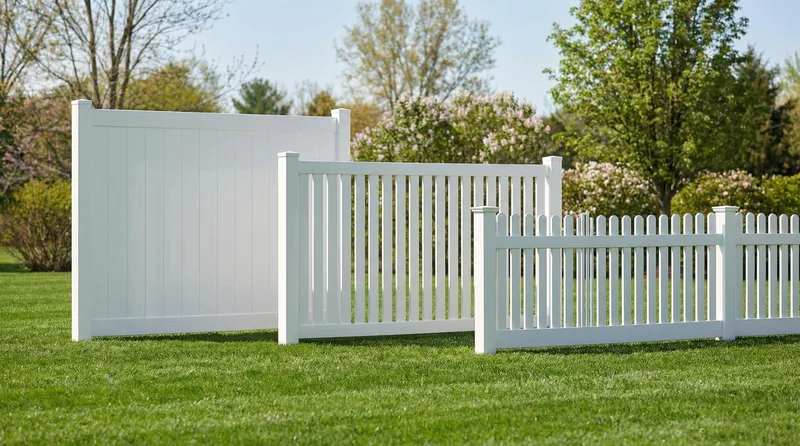
Vinyl is not just one look. As the most trusted Utah County vinyl fence installer, here is what we put up most often across the different communities in North Utah County:
- Full Privacy Panels -- Six-foot solid panels that block the view completely. This is what 80 percent of Lehi customers pick, especially in the tighter-lot subdivisions of Eagle Mountain and the new Vineyard builds along Utah Lake where your neighbor's kitchen window is 30 feet from your patio.
- Semi-Privacy -- Narrow gaps between boards let air through while still screening the view. A smart pick for side yards and for HOAs that require some visual permeability, like a few of the Cedar Hills communities along the golf course.
- Picket -- The classic front-yard fence. Vinyl pickets stay white and straight without the annual scraping and repainting that wood picket demands. Popular in the established Highland neighborhoods off Timpanogos Highway where curb appeal matters.
- Ranch Rail -- Two or three horizontal rails, wide post spacing, clean sightlines to the mountains. The go-to choice on the larger Alpine and Highland lots and the horse properties along the bench where you do not want to wall off the Wasatch view.
We Speak HOA So You Do Not Have To
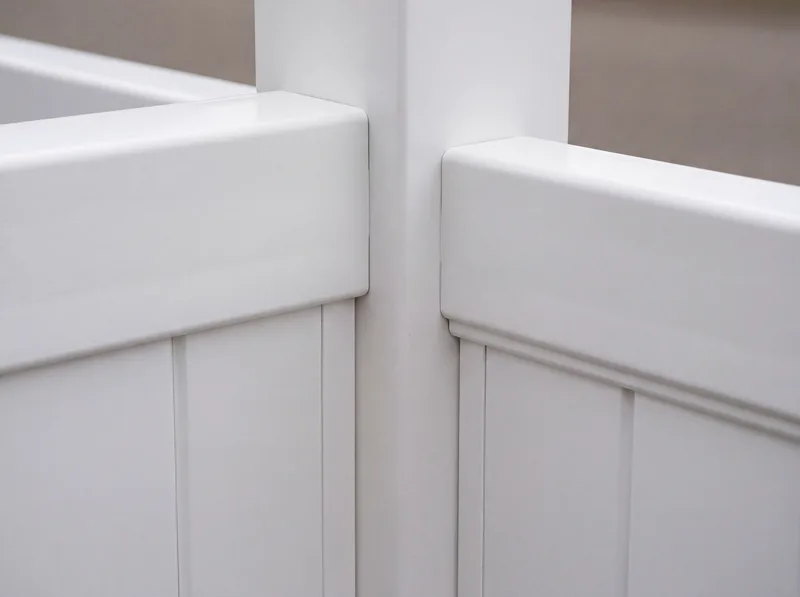
Dealing with an architectural review committee is nobody's idea of fun. Every planned community from Traverse Mountain to the Saratoga Springs lakeside developments has its own set of rules -- approved colors, maximum heights, required setbacks, even which direction the "good side" faces. We have installed vinyl in enough of these neighborhoods to know the drill. We pull up your specific CC&Rs during the estimate, select a style and color that checks every box, and if your HOA requires a formal submission with drawings and specs, we put that together for you. You sign off, we submit, and when approval comes back we get to work. No surprises, no rejected permits, no angry letters from the board.