Why Some Lehi Homeowners Refuse to Go Vinyl
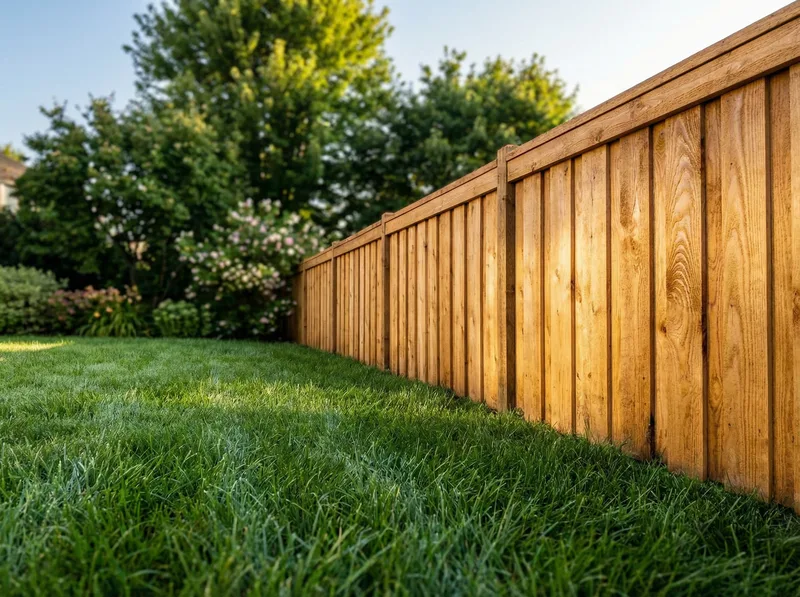
We get it. You moved to Lehi partly for the mountain views and the open feel of the valley, and a row of white plastic panels around your backyard does not exactly capture that vibe. A cedar fence does. It picks up the colors of the foothills -- the sage, the tan, the warm brown of exposed sandstone along the bench above American Fork. Left natural, cedar weathers to a silver-grey that looks like it has been there forever. Stained, it can match anything from a modern farmhouse in Vineyard to a craftsman in Pleasant Grove. Wood has a texture and warmth that vinyl simply cannot fake.
The honest trade-off is maintenance. At 4,500 feet, with UV radiation roughly 25 percent stronger than at sea level and winters that dump over 50 inches of snow, wood takes a beating that lower-elevation cities never experience. That is why species selection matters here more than almost anywhere. Western red cedar is our default recommendation because its natural oils resist rot, insects, and moisture cycling without chemical treatment. For homeowners watching the budget, pressure-treated pine performs well -- the preservatives are forced deep into the fibers -- but it needs re-staining every two to three years to keep the UV at bay. Cedar can go longer between coats. Either way, you are trading some sweat equity for a fence that actually has character.
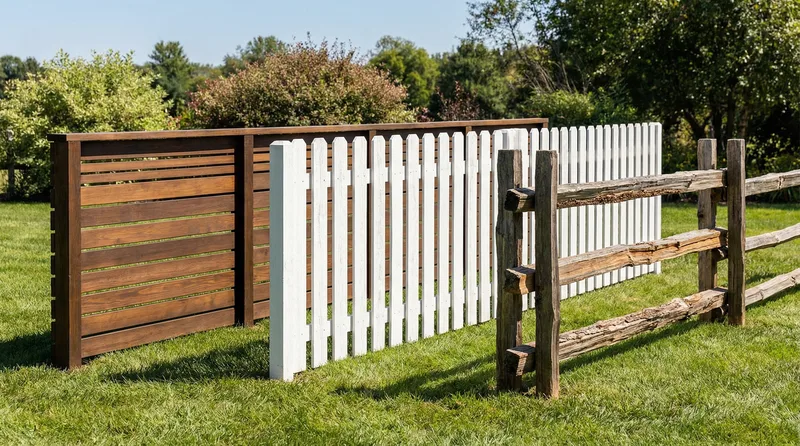
Style-wise, we build whatever fits your yard and your neighborhood. Board-on-board is our most popular design because it looks finished from both sides -- your neighbor sees the same fence you do, which matters when lots are tight. Dog-ear privacy fences are the workhorse for full seclusion on a budget. Shadowbox designs let the canyon breezes through while still blocking most of the view. And for the bigger parcels up in Highland, Alpine, and the equestrian properties along the east bench, split-rail and post-and-rail give you a boundary without walling off the Timpanogos view.
Two Kinds of Dirt, One Standard of Installation
The ground under your fence matters as much as the wood above it, and North Utah County does not make it easy. East of I-15, from the Lehi bench up through Cedar Hills and Highland, you are digging into rocky clay hardpan that can crack a standard auger bit. West toward Saratoga Springs and Eagle Mountain, the soil shifts to loose, alkaline sand left behind by ancient Lake Bonneville. Both types require adjustments. On the rocky bench, we bring hydraulic equipment that punches through the clay. Near the lake, we widen the footings so the concrete has more surface area to grip the softer ground. Same result either way: posts that stay plumb through ten years of wind and frost.
Every post sits in concrete at least 30 inches deep -- past the frost line -- so the March freeze-thaw cycle does not shove them out of alignment. On properties that face the Point of the Mountain wind corridor head-on, we go deeper and bump up the post diameter on long runs. A wood fence catches more wind than people realize, and the difference between a fence that lasts 8 years and one that lasts 20 is almost entirely about what is happening underground.